

Mariners Select 3B Ace Reese: Here is the Profile
Mariners select 3B Ace Reese in the first round at pick No. 24.

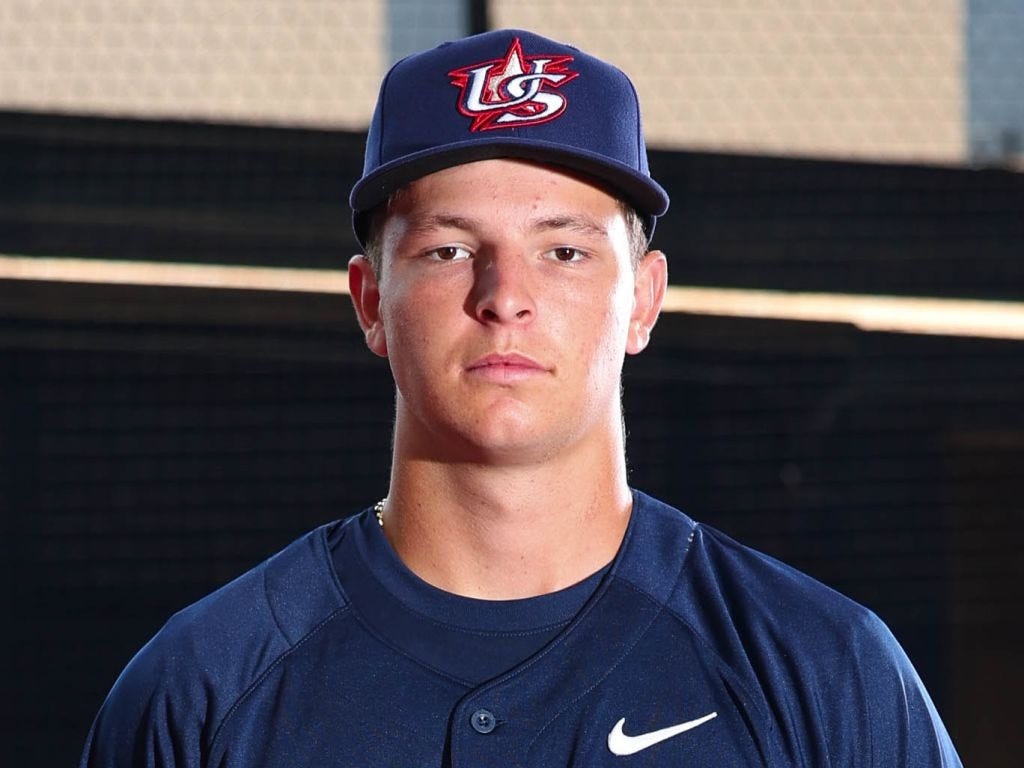
The Mariners’ selection of Ace Reese is a clear statement about how they want to solve their run-scoring problem: bet big on a proven, left-handed SEC slugger with plus game power, mature swing decisions, and enough defensive flexibility to find a home somewhere on the corners. Reese isn’t a “maybe the power shows up” college bat; he’s already lived as the middle-of-the-order engine for one of the country’s toughest programs, and his profile fits cleanly into Seattle’s emerging philosophy of pairing data-backed power bats with an increasingly sophisticated player-development apparatus.
Introduction: Why Ace Reese, Why Now
For years, Mariners fans have watched a pitching-and-defense foundation struggle to carry an offense that too often felt one-dimensional and streaky. In that context, using a premium pick on Ace Reese is less about checking a positional box and more about acquiring a profile: a left-handed hitter with an actual track record of punishing high-level pitching, getting on base, and sustaining impact over multiple seasons.
Reese arrives as one of the most accomplished college bats in his class, and his combination of performance, underlying traits, and age/level context gives Seattle something they’ve often lacked—an analytically friendly, relatively high-floor offensive building block who still has meaningful upside. Where some first-round bats need wholesale swing reconstructions or hope for future strength gains, Reese is already the kind of hitter you can drop into an upper-minors lineup in short order and reasonably expect production.
Player Overview
Ace Reese is a left-handed hitting, right-handed throwing corner infielder with a prototypical middle-of-the-order frame—around 6’3”–6’4” and solidly built, with strength that translates directly into the way the ball comes off his bat. He spent his freshman season at Houston, posting respectable numbers and showing early signs of plate discipline and gap power, before transferring to Mississippi State and evolving into one of the SEC’s most dangerous hitters.
At Mississippi State, Reese quickly became the offensive centerpiece. He started at third base, hit in the heart of the order, and carried a lineup that consistently faced some of the best arms in college baseball. The accolades followed: conference honors, national attention, and preseason All-America recognition that reflected not just what he had already done, but what evaluators believed he was likely to keep doing.
Beyond the awards, the core story is straightforward: wherever Reese has gone, he has hit. The step from Houston to the SEC was not a small one, yet he handled it in stride and then pushed past “solid contributor” into “legit star,” which matters when you’re projecting how a bat will deal with the next jump—pro ball and, eventually, big-league pitching.
Offensive Profile
Surface Production
The simplest way to understand Reese’s bat is to look at how relentlessly productive he’s been. After a strong freshman line at Houston that featured a healthy on-base percentage and encouraging extra-base hit totals, Reese landed in Starkville and immediately started stacking seasons that, in most programs, would go down in the record books.
Across his two years at Mississippi State, he lived north of .330 in batting average, paired that with on-base percentages well over .420, and slugged north of .700. He cleared the 20-homer mark in consecutive seasons, added a substantial number of doubles, and drove in runs at a pace befitting a true cleanup hitter. Those are not inflated stat lines from a soft schedule; they came in the SEC, against arms that routinely populate the top of draft boards.
Importantly, his second year didn’t represent a “regression” so much as a different shape of excellence. Even as his batting average eased down from the .350 range to something closer to the low-.330s, his walk rate ticked up, his strikeouts edged down, and his overall offensive contribution stayed firmly in the “impact” bucket. That evolution—maintaining production while improving swing decisions—is exactly what you want to see before the jump to pro pitching.
Approach and Hit Tool
Mechanically, Reese’s swing is built to be repeatable. He starts from a balanced base with a calm pre-pitch load, uses quick hands and efficient hip rotation, and keeps the barrel in the zone long enough to cover a reasonable range of pitch types and locations. There’s no excessive movement that needs to be stripped out, and no glaring timing mechanism that looks like it will fall apart under pro-level sequencing.
His plate approach reflects the same kind of maturity. Reese has shown consistent comfort working into hitter’s counts, letting pitchers come to him rather than forcing damage from pitcher’s pitches. As he has seen better arms and more tailored gameplans, he’s adjusted by leaning into his pitch recognition rather than simply swinging harder, which is how you end up with a hitter whose walk percentage and on-base skills hold up even as opponents try to avoid him.
The hit tool itself is not in the “elite” pure-contact tier, but it’s solidly above average with a developmental runway. He makes enough contact to unlock his power without living on a knife’s edge, and his improvements in swing decisions hint that he could sustain a batting average that’s comfortably playable for a middle-of-the-order bat rather than living at the extremes. In practical terms, he profiles as a hitter who could settle in the .250–.270 band in the majors, depending on how his transition to pro breaking balls and velocity management goes.
Power and Batted-Ball Profile
Power is where Reese separates himself. This is plus game power, not just plus raw in a batting cage. The ball leaves his bat differently when he connects, and he’s already shown that he can access that impact against serious competition. Back-to-back 20+ homer seasons in the SEC, paired with a steady stream of doubles, tell the story of a hitter whose damage lives in multiple zones instead of hinging on a single pull-side launch angle.
Underlying that production is a combination of bat speed, strength, and leverage that doesn’t require him to sell out. Reese doesn’t have to choose between “contact swing” and “power swing” as drastically as some sluggers do; his baseline operation already contains enough force to translate into extra-base hit volume. That gives the Mariners some breathing room in development—coaches can focus on refining his decision-making and adapting his plan to pro repertoires without worrying that making him a bit more selective will steal his punch.
In terms of batted-ball shape, he’s not a pure fly-ball-only hitter, which is good. His mix of line drives, hard ground balls, and well-struck fly balls suggests he has more paths to production than “either the ball goes in the air to the pull side, or nothing happens.” That matters in an environment where pitchers are increasingly adept at taking away a hitter’s preferred launch window.
Defense, Run Tool, and Positional Outlook
Defensively, Reese comes with both experience and questions. Mississippi State ran him out at third base and trusted him as the anchor on the left side of the infield, which tells you something about his baseline competence. He has enough arm for the position and shows the kind of basic actions—fielding routine plays, making throws from different body positions—that suggest he’s not a complete liability.
At the same time, evaluators are split on whether he will remain a long-term third baseman at the highest level. His range and first-step quickness are adequate but not standout, and the speed of the major-league infield game tends to expose even small delays in reads, footwork, and release. It’s entirely possible that, as he moves up the ladder, the defensive staff and front office decide that his best path is at first base or in a corner outfield spot where the demands are more forgiving.
His speed is roughly average. He isn’t the kind of runner who will create value on the bases, but he also doesn’t project as a base-clogger who forces teammates into station-to-station baseball. From a roster standpoint, that’s an acceptable outcome for a bat-first player: neutral in the running game, no major constraints on how aggressive the team can be when he’s on.
For the Mariners, the early years of his development will likely center on giving him every opportunity to stick at third. If he can settle in as a playable defender there, his overall value spikes: you’re talking about a plus-power bat at a tougher defensive spot. If the glove does ultimately push him off the position, his offensive profile is strong enough to support everyday play at first base or in left field without feeling like a stretch.
Fit with Mariners Philosophy and Timeline
Seattle’s choice of Ace Reese sits neatly within a broader organizational shift toward more intentional, data-informed offense. Recent years have seen the club invest in swing-decision tools, biomechanical assessment, and individualized hitting plans. In that environment, Reese is almost a tailor-made subject: a hitter with enough performance and foundational skill to thrive, but still with clear areas where targeted development can produce gains.
From a philosophical standpoint, the Mariners are betting that:
College performance against strong competition is a meaningful predictor of big-league readiness.
Power matters, but only when paired with enough on-base skill to sustain value through slumps.
The organization can help a player convert “good enough” swing decisions into “above-average” ones.
Reese checks each of those boxes. He’s already demonstrated he can hit high-end pitching, already shown he can get on base and do damage, and already begun the process of refining his approach. The Mariners aren’t trying to invent a hitter from raw ingredients; they’re trying to nudge an already dangerous bat further up the efficiency curve.
In terms of timeline, Reese is the type of player who should move relatively quickly. As a polished college performer, he’s a candidate to reach the upper minors within two or three seasons if health and performance cooperate, and to knock on the major-league door during the heart of Julio Rodríguez’s prime. The organization doesn’t need him to be ready tomorrow, but they do need waves of offense that can join or supplement the existing core. Reese is one of those waves.
Projection and Role
Projecting any amateur player is an exercise in probabilities, not certainties, but the shape of Reese’s future is fairly clear.
Ceiling: A legitimate middle-of-the-order bat who hits for solid average, posts strong on-base percentages, and regularly clears the 25–30 home run threshold. In that outcome, he becomes one of the anchors of a Seattle lineup, the kind of hitter you pencil in for 155 games and expect him to tilt run expectancy in your favor most nights.
Median outcome: An everyday corner bat—at third, first, or left—with plus power and acceptable on-base skills who is more often a lineup stabilizer than a true star but still an above-average regular. In that scenario, his impact is felt across multiple seasons as a reliable run-producer rather than sporadically.
Floor: If the hit tool stalls against major-league pitching or the defensive home narrows more than expected, he could settle as a platoon or bat-first role player. Even then, left-handed power with some on-base feel has real value, especially in the modern game’s matchup-driven environment.
For the Mariners, the upside is worth the investment. An organization that has often been forced to scrape for offense around its pitching core now has a chance to add a bat whose strengths align with both modern analytics and the realities of their home park and division. It’s not a guarantee of future comfort at the plate, but it’s a smart bet on a profile that has already proven itself at a high level and still offers room for growth.
My pro player comparison: Max Muncy
Enjoy Baseball.